March 9, 2026: The landscape of preventive medicine is shifting. For years, the gold standard for managing prediabetes has been the Diabetes Prevention Program (DPP)—a lifestyle intervention typically led by human health coaches. However, a recent clinical trial, highlighted by Dr. Priyanka Rasne, a prominent Diabetologist in Punawale, suggests that the “human touch” may now have a formidable, and equally effective, digital counterpart.
The Study: Man vs. Machine
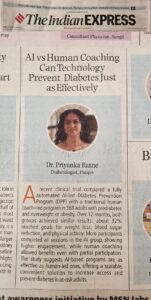
The clinical trial, recently featured in The Indian Express, monitored 368 adults struggling with prediabetes and weight issues (overweight or obesity). The participants were split into two distinct paths:
-
A fully automated, AI-led Diabetes Prevention Program.
-
A traditional human coach-led program.
Over a 12-month period, the results were strikingly similar. Approximately 32% of participants in both groups successfully reached their primary health goals, which included significant weight loss, blood sugar reduction, and increased physical activity.
The Engagement Factor: Why AI is Winning
Perhaps the most surprising takeaway from the study wasn’t just the clinical success, but the engagement levels. The AI-led group saw a higher percentage of participants completing every single session.
In a world where convenience is king, AI offers 24/7 accessibility. While a human coach requires scheduled appointments and travel, an AI coach is in your pocket. This high level of “stickiness” suggests that for modern, busy adults, technology might actually be easier to stick with over the long term.
The Strength of Human Coaching
However, the human element isn’t obsolete. The study noted that human coaching provided benefits even when participants only partially engaged with the program. This suggests that the “human-led” approach may offer more depth or psychological resonance, allowing for health gains even when a patient isn’t “perfect” in their attendance.
Scalability: The Key to Public Health
Dr. Priyanka Rasne points out that the real victory here is scalability. Diabetes is a global epidemic, and there simply aren’t enough human health coaches to support every at-risk individual. AI-based programs offer:
-
Increased Access: Reaching remote or underserved populations.
-
Cost-Effectiveness: Reducing the financial barrier to preventive care.
-
Consistency: Delivering standardized, evidence-based advice without human fatigue.
The Verdict
The study concludes that AI-based programs are just as effective as human-led ones. For at-risk adults, this means more choices and fewer excuses. Whether you prefer the empathy of a human professional or the 24/7 convenience of an algorithm, the path to preventing diabetes is now more accessible than ever.
As we look toward 2026 and beyond, the integration of AI into our daily health routines isn’t just a luxury—it’s a necessary evolution in the fight against chronic disease.

Dr. Priyanka Rasne
Physician, Diabetologist, and Metabolic Disease Specialist
Meet Dr. Priyanka Rasne
Your trusted expert in diabetes, thyroid, PCOS, and general health!
MBBS, FCPS (Maharashtra Health University, Nashik)
Fellowship in Diabetes Management (Apollo University, Hyderabad)
Certified by the American Diabetes Association
Dr. Rasne specializes in preventing and treating metabolic disorders, ensuring you get the best care for a healthier life. Visit Metroplus Pharma and Clinic, Punawale, Pune, for expert consultations on diabetes, thyroid issues, PCOS, and general health concerns